Last updated October 16, 2026
Free written scope consultation - allowances, timeline, and change-order rules on paper before a single trade is scheduled
Construction Warning Signs: A West Palm Beach Homeowner’s Reference Guide
The most common thing homeowners say after a bad remodel experience in South Florida is, “He seemed so professional.” The warning signs were there, but they didn’t know what to look for. They assumed a clean polo shirt and a polished estimate meant the work would be done right. A bad contractor in West Palm Beach rarely looks like a bad contractor on day one. This guide names the specific, observable behaviors that predict trouble before you write the second check to fix someone else’s work, and if you want more guidance, we also have a step-by-step guide on how to hire a construction contractor in West Palm Beach. By the time you finish reading, you’ll know exactly what to look for in the first phone call, the bid document, and the first two weeks on the job.
Quick Answer
Signs of a bad contractor in West Palm Beach include allowance-heavy bids that lowball the real price, refusal to list subcontractor names, no permit line item, verbal promises that never appear in writing, and crews that show up inconsistently in the first two weeks. The single most reliable warning sign is any contractor who won’t put a complete, fixed price and a written guarantee in your hand before work starts. If a bid references Florida Building Code, lists every sub, and prices the permits, you’re likely dealing with someone who actually intends to finish the job.
Styles & brands we work with
Table of Contents
- Bid Red Flags Specific to the West Palm Beach Market
- Licensing Red Flags: What “I Work Under My GC’s License” Actually Means
- Contract Red Flags That Let Contractors Disappear Early
- On-Site Behavioral Red Flags in the First Two Weeks
- What Palm Beach County’s Building Division Actually Sees
- What a Squared-Away Contractor Looks Like
- Common Mistakes to Avoid
- When to Call a Professional
- Frequently Asked Questions
Bid Red Flags Specific to the West Palm Beach Market
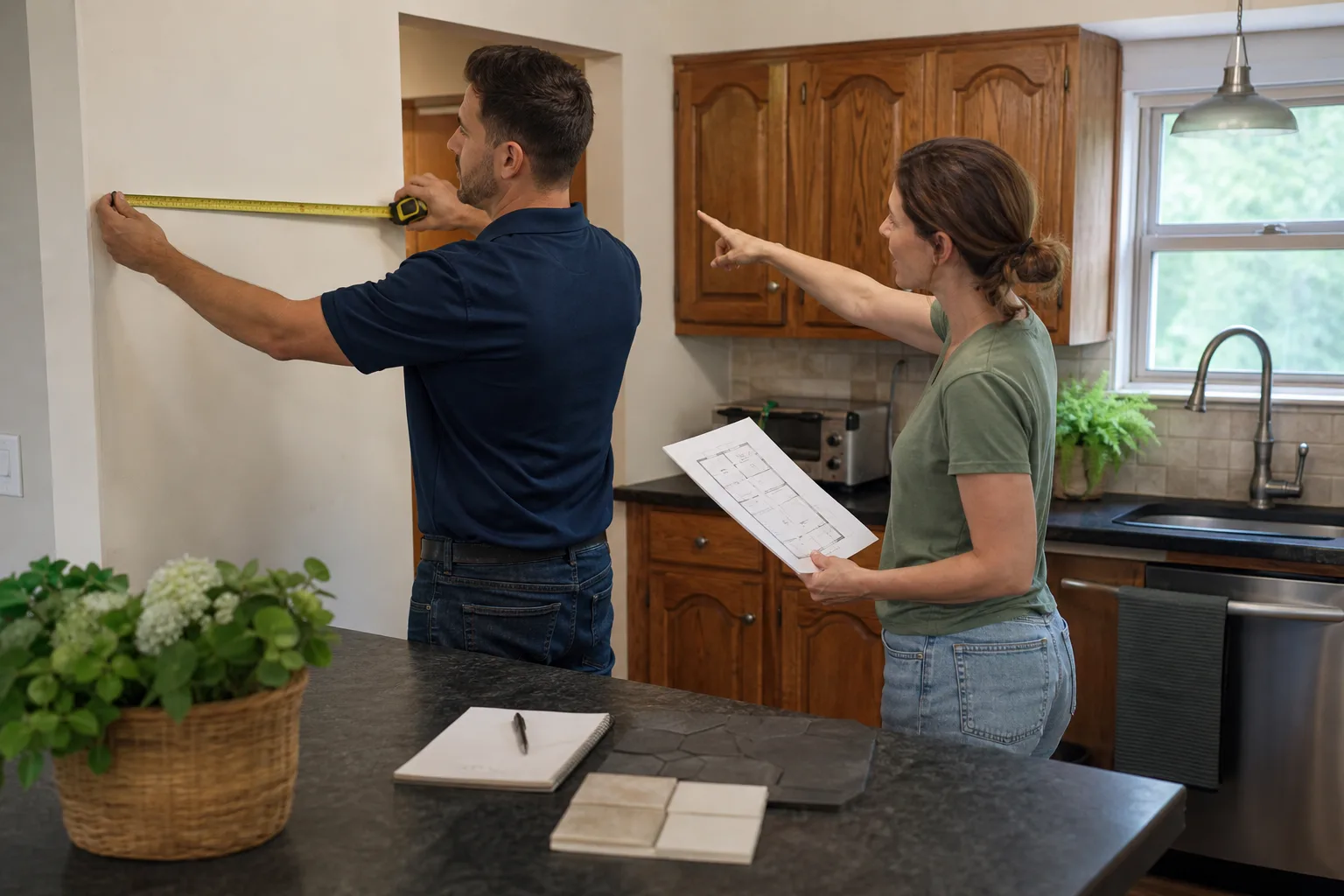
Every bad remodeling job in West Palm Beach starts with a piece of paper. The bid document is where a contractor either commits to a number or leaves himself room to move it later. A disciplined contractor writes a bid that a stranger could read and understand. A contractor planning to reprice you at the door writes a bid that’s vague in exactly the places where money hides.
Red Flag #1: Allowance-Heavy Proposals
An allowance is a placeholder number a contractor puts in a bid for materials that haven’t been selected yet. It’s a normal part of remodeling, but in the West Palm Beach market we’ve seen bids where 40% of the total project price sits in allowances. That’s not a bid. That’s a guess with your signature at the bottom. A kitchen bid with a $12,000 cabinet allowance when KraftMaid or Wellborn cabinetry for that size kitchen runs $18,000 to $25,000 means the final price moves up by thousands once you actually pick what you want. The allowance game is how a $60,000 kitchen becomes an $85,000 kitchen without a single “change” to the scope. Look for a bid where the major material categories carry a real, selected brand and a real number. If the contractor can’t tell you what brand of cabinet that allowance buys, he hasn’t priced the job.
Red Flag #2: No Subcontractor Names
A general contractor who won’t tell you who’s doing the plumbing, electrical, or tile work is a contractor who hasn’t decided yet, or doesn’t want you to know. In Florida, a GC is legally responsible for the subs he hires, but that responsibility doesn’t pay your mortgage while a dispute plays out. A written bid should name the subcontractors or at minimum specify that qualified, licensed subs will be listed in the contract before signing. We list subs in writing because a homeowner has a right to know who’s walking through the door. The General Contractor in West Palm Beach you hire should treat subcontractor disclosure as standard practice, not a favor.
Red Flag #3: No Reference to Florida Building Code or Permit Costs
West Palm Beach sits in a high-velocity hurricane zone. That means specific structural requirements govern everything from window openings to roof-to-wall connections. A bid that doesn’t mention Florida Building Code compliance, wind mitigation, or permit costs is a bid written by someone who may not plan to pull permits at all. Permits in West Palm Beach and unincorporated Palm Beach County cost real money, typically hundreds to a few thousand dollars depending on scope, and inspections are mandatory for structural, electrical, plumbing, and mechanical work. If the permit line is missing from the bid, ask why. If the answer is “we’ll handle it later,” walk. Unpermitted work in West Palm Beach is a liability that follows the house, not the contractor.
What a Clean Bid Looks Like
- Line-item pricing that names materials by brand and model where practical. “Kohler undermount sink, model X” is a bid. “Quality sink” is a placeholder.
- Permit costs listed as a separate line with the actual fee schedule, not “permit costs TBD.”
- Subcontractor names or a written commitment to name them before contract signing.
- Payment schedule tied to inspection milestones, not calendar dates. A contractor who wants 50% before demo day is financing his last job on your money.
- A written guarantee with specific terms and duration. If the guarantee is verbal, it doesn’t exist.
In West Palm Beach, we’ve also seen bids that quietly exclude things like hurricane-rated garage doors or impact-rated windows when the existing ones are clearly at end of life. Read the exclusions section. That’s where scope disappears.
Licensing Red Flags: What “I Work Under My GC’s License” Actually Means
Florida law is clear on this, and it’s one of the most misunderstood facts in the West Palm Beach remodeling market. A contractor who tells you he works under someone else’s license is telling you he is not licensed to do the work himself. In Florida, a license is not transferable. The person whose name is on the contract must be the person whose name is on the license, or an authorized qualifying agent for that licensed entity. When an unlicensed individual works under a licensed GC’s number, the liability structure changes in ways most homeowners never anticipate until something goes wrong.
What it means legally in Florida is this: if an unlicensed subcontractor damages your home, your recourse narrows considerably. The Florida Construction Industries Recovery Fund exists to compensate homeowners who are harmed by licensed contractors. An unlicensed operator gives you no route to that fund. Your homeowner’s insurance may also deny a claim arising from unlicensed work, because the work was never lawful to begin with. And in West Palm Beach specifically, the city’s Building Division requires permits to list the name and license number of the contractor of record. If that name doesn’t match the person you’re paying, you’re paying the wrong person.
What to verify before you sign anything in Palm Beach County:
- Ask for the license number directly. A licensed contractor provides it without hesitation. Then look it up on the Florida Department of Business and Professional Regulation (DBPR) website and check that the name matches who you’re actually dealing with.
- Check for complaints. The DBPR maintains records of disciplinary actions. A license with a history of complaints isn’t always disqualifying, but it requires a conversation.
- Confirm the permit application will carry the same name. If there’s any mismatch, that’s the moment to stop the process.
At Bradford Remodeling Co West Palm Beach, part of the Garrison Partners family since 2004, every contract is with a licensed entity, every permit is pulled in the proper name, and every technician who walks onto your property is background-checked and uniformed. Our owner, Curtis Lane, holds the business to The Garrison Standard, which means the name on the contract is the name doing the work. No “I work under my buddy’s license” arrangements, ever.
Our Home Remodeling in West Palm Beach service operates under the same discipline on every job, from a single bath refresh to a whole-home renovation.
Contract Red Flags That Let Contractors Disappear Early
The contract is the single most important document in any West Palm Beach remodel, and most homeowners skim it. That’s exactly what a bad contractor counts on. Three clauses in particular cause the majority of disputes in Palm Beach County, and all three are easily spotted if you know the language to look for.
Red Flag #1: Dispute Resolution Clauses That Waive Your Lien Rights
A construction lien is the strongest tool a homeowner has when a contractor doesn’t pay subs or abandons a job. Some contracts in Florida include clauses that require arbitration but quietly waive the homeowner’s right to file a lien, or to join a lien action. Read the dispute resolution section carefully. If the contract says disputes go to arbitration and also says you waive statutory lien rights, that’s a contractor who has been through this before and wrote the contract so he wins next time. A fair contract preserves your statutory rights. It doesn’t trade them away in the fine print.
Red Flag #2: Change-Order Language That Allows Verbal Approvals
A change order is a written document that modifies the scope or price of a contract. In a disciplined operation, nothing changes without a signed change order. No exceptions. But some West Palm Beach contracts include language like “changes approved verbally shall be deemed binding” or “owner shall be liable for all work requested orally.” Once that language is in the contract, a contractor can claim you told him to upgrade the flooring, and you now owe $4,000 with no paper trail. The fix is simple: strike any language that makes verbal approvals binding. Require that every change order carry a written price, a written scope, and both signatures before work proceeds.
Red Flag #3: “Substantial Completion” Definitions That Let Contractors Walk Early
“Substantial completion” is the point at which the contractor says the work is done enough to trigger final payment. In a bad contract, substantial completion is defined vaguely, sometimes as “when the work is substantially complete in the sole opinion of the contractor.” That language lets a contractor collect 90% of the money and then stop returning calls for the punch list. In Florida, a proper definition of substantial completion ties to objective markers: final inspections passed, certificate of occupancy issued where applicable, and all required work installed and operational. If the contract doesn’t list those markers, add them before you sign.
The Garrison Standard at Bradford Remodeling Co West Palm Beach requires every price and every guarantee in writing before a single tool comes out. Our 365-Day Done Right Promise means exactly what it says: if the work doesn’t hold within a year of completion, we return and correct it at no charge. That commitment is written into the contract, not discussed over a handshake.
On-Site Behavioral Red Flags in the First Two Weeks
Most contractors who abandon a job don’t abandon it on day 30. They abandon it on day 12, but they telegraph it in the first two weeks. The patterns are consistent, and once you know them, they’re impossible to miss. In our experience working across West Palm Beach, from the older neighborhoods near the Intracoastal to the newer developments west of I-95, the warning signs show up the same way every time.
Red Flag #1: Inconsistent Attendance in the First Week
The first week of a remodel is when momentum matters most. A crew that shows up Monday, skips Tuesday, sends one guy Wednesday, and disappears Thursday is a crew that’s splitting time between your job and someone else’s, or a contractor who underbid the job and is already looking for ways to cut labor. In Palm Beach County’s tight labor market, the temptation to run two jobs at once is real. A disciplined contractor blocks out your project and runs it through to completion. Ask before you sign: “How many jobs will your crew be running during my remodel?” A straight answer is normal. A vague one is a warning.
Red Flag #2: Material Deliveries That Don’t Match the Schedule
Watch what shows up. If your project is a kitchen remodel in West Palm Beach and the first week passes with no cabinetry selected, no countertop templating scheduled, and no delivery dates on the calendar, the contractor is stalling. Material lead times are predictable. KraftMaid and Wellborn cabinetry orders run weeks, Cambria and Caesarstone countertops get templated after cabinet installation, and Kohler or Moen fixtures ship from distribution centers. A contractor who isn’t ordering materials in week one isn’t finishing your job in the timeframe on the contract. Ask for the written material order schedule and hold them to it.
Red Flag #3: No Daily Cleanup, No Site Protection, No Dust Control
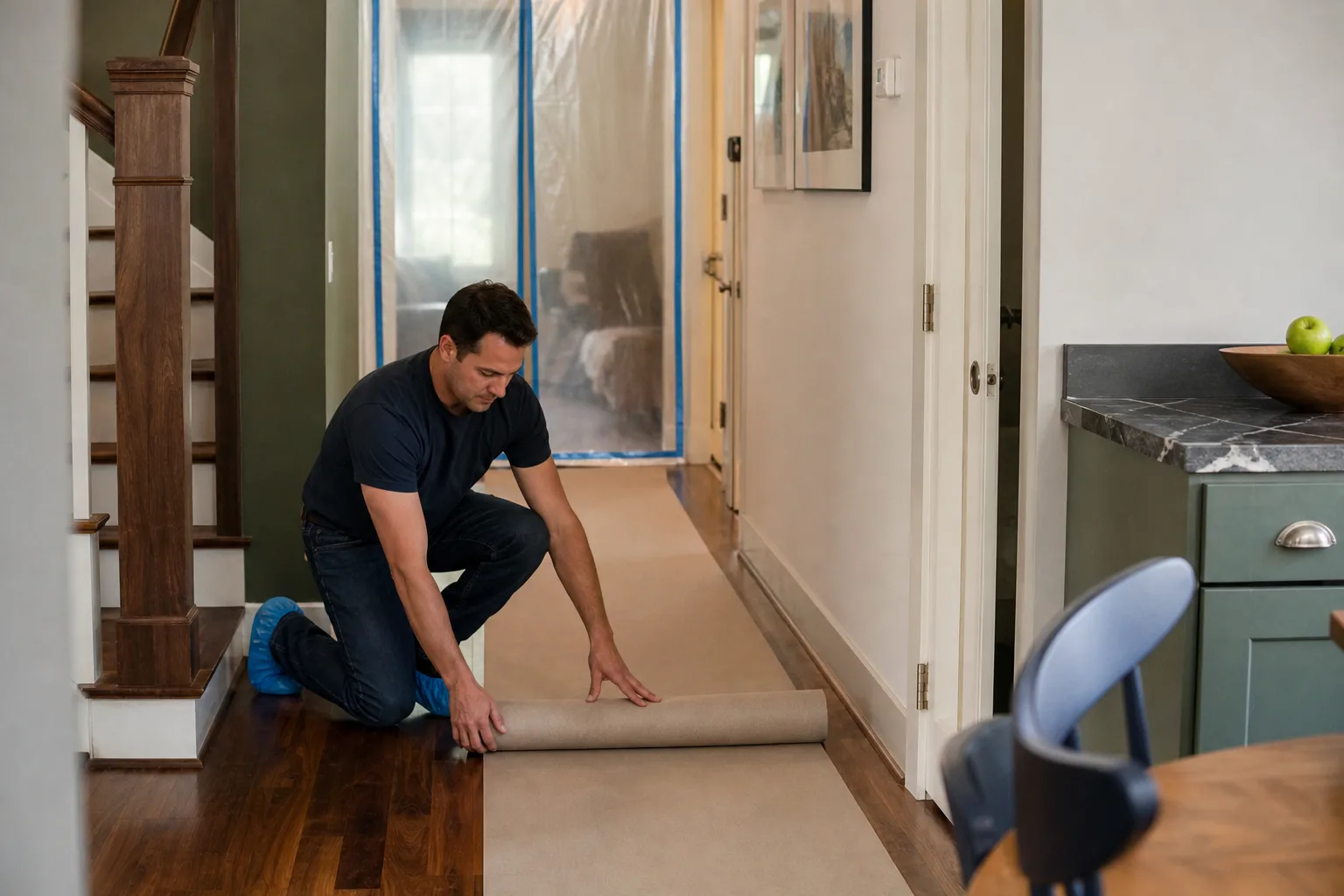
A crew that respects your home protects your home. Walk through a job site where the crew is working and look at the basics: Are floors covered? Is there a defined path from the work area to the door? Are trash and debris contained or just thrown in a pile? A crew that treats your occupied home like a construction dump in week one will leave you with scratched floors, damaged drywall, and a cleanup bill in week six. The trade term for the surface under a flooring installation is “substrate.” The term for what protects your floors during a remodel is “floor protection.” If neither is visible in the first week, you’re seeing the future.
Red Flag #4: The Crew Can’t Answer Basic Questions
When a tile installer can’t tell you what underlayment he’s using, or an electrician doesn’t know where the panel is, you’re not dealing with a trained crew. You’re dealing with a contractor who hired whoever answered a Craigslist post. That matters in West Palm Beach because our building code demands specific installation standards for everything from moisture barriers to wind-resistant attachments. A worker who can’t explain what he’s doing probably shouldn’t be doing it. Ask the crew simple questions in the first week. Real tradespeople talk about their work with confidence. People making it up get defensive.
At Bradford Remodeling Co West Palm Beach, every technician is background-checked and uniformed. You know who’s walking through your door before they arrive, and they can tell you exactly what they’re doing and why. That’s The Garrison Standard in action, and it’s not negotiable.
What Palm Beach County’s Building Division Actually Sees
Palm Beach County’s Building Division and the Florida DBPR keep records of complaints against contractors, and the patterns in West Palm Beach are clear and consistent. The most common categories aren’t exotic, and they’re not rare. They’re the same failures that show up in bid documents and contracts, just filed as formal complaints after the damage is done.
The Complaint Categories Homeowners File Most Often in West Palm Beach
- Permit violations: Work started without a permit, work done beyond the scope of an issued permit, or final inspections never scheduled. In West Palm Beach, this often surfaces during home sales when an inspection reveals unpermitted electrical or structural work.
- Abandonment: The contractor collected money and stopped showing up. In Florida, abandonment is a specific statutory violation, not just a customer service problem. It’s also the hardest claim to resolve because the money is usually gone.
- Subcontractor nonpayment: Homeowners in West Palm Beach frequently discover that the GC collected payment but never paid the subs, leaving the homeowner exposed to liens even though they paid in good faith.
- Workmanship failures: Code violations, failed inspections, and structural or waterproofing defects that show up months after the job is “complete.” South Florida’s humidity and rainy season expose these quickly, especially where exterior waterproofing and moisture barriers were installed incorrectly.
- Contract disputes: Change orders added without written authorization, final invoices that don’t match the contract, and “substantial completion” disagreements that leave a job stalled at 95%.
Why These Patterns Matter in West Palm Beach Specifically
West Palm Beach’s climate is the quiet engine behind a lot of contractor failure. The heat and humidity of a South Florida summer stress exterior materials in ways a contractor from another market may not anticipate. The rainy season, running roughly mid-May through October, punishes any wall or roof assembly that isn’t flashed, sealed, and vented correctly. Brands like GAF and James Hardie engineer products specifically for this environment, but a contractor who installs without following the manufacturer’s spec creates failures that don’t show up for six months and are expensive to trace by then. Soffit, the underside of a roof eave that provides attic ventilation, is a common failure point. Installed wrong, it traps moisture and invites mold into the attic. A contractor who understands West Palm Beach’s weather patterns writes that into the scope of work. A contractor who doesn’t writes a bid that looks cheaper but costs more later.
If you’re planning a kitchen project, Kitchen Remodeling in West Palm Beach done right means a scope that accounts for the moisture and heat realities of our coastal climate, from cabinet materials to ventilation requirements.
What a Squared-Away Contractor Looks Like
Most guides about bad contractors stop at the warning signs. That’s useful, but knowing what to run from is only half the job. The other half is knowing what to run toward. A squared-away contractor in West Palm Beach looks like a specific set of behaviors, and they’re consistent across every trade, from general contracting to finished carpentry.
1. The Bid Is Complete on the First Pass
A disciplined contractor writes a complete bid the first time because he’s priced enough jobs to know what yours will cost, as detailed in our General Contractor Maintenance Checklist for West Palm Beach Homeowners. That means real material brands with real numbers, permit fees listed, subs identified, and a payment schedule tied to milestones. It does not mean a vague list of allowances and a promise to “work with you” on selections later.
2. The Contract Is Boring and Specific
A good contract reads like a legal document because it is one. It defines substantial completion with objective markers. It requires written change orders. It preserves your lien rights. It states the guarantee terms in plain English. If a contractor hands you a contract and tells you not to worry about the details, worry about the details.
3. The Crew Runs on a Schedule
Subcontractors know when they’re expected. Materials show up before the crew that needs them. The site gets cleaned at the end of each day. In West Palm Beach, where a sudden afternoon storm can soak an exposed job site in twenty minutes, daily protection routines aren’t optional, and a professional crew knows it.
4. The Guarantee Is Written Down
Every completed project at Bradford Remodeling Co West Palm Beach carries a written 365-Day Done Right Promise. If the work fails inside that year, we come back and correct it at no charge. Not “we’ll take a look.” We make it right. That’s what a guarantee looks like when it has teeth, and it’s the difference between a contractor who intends to finish the job and one who intends to finish the invoice.
Curtis Lane, our owner, holds every project to The Garrison Standard, which puts every price and every guarantee in writing before a single tool comes out. That’s the whole point of working by the book. When everything is written down, there’s nothing to argue about later.
Common Mistakes to Avoid
- Accepting a verbal quote and a handshake. In Florida, a verbal agreement over $500 is unenforceable as a construction contract. If it’s not in writing, it didn’t happen. Insist on a written bid and a written contract before any money changes hands.
- Paying a large deposit before permits are pulled. The permit application should be filed before you write a significant check. A contractor who wants 50% down before the permit is even submitted is financing his cash flow on your project, which puts you in line behind his other problems.
- Skipping the DBPR license check. It takes five minutes and it’s free. A contractor with active complaints or no license at all is discoverable before you sign anything. Do it every time, even for referrals from friends.
- Signing a contract with allowance-heavy pricing. Allowances are where budgets go to die. If the bid shows more than 15 – 20% of project value in allowances, the real price is unknown and the contractor knows it.
- Ignoring the exclusions section. The scope of work is defined as much by what’s excluded as by what’s included. Read the exclusions before you read the price, and ask about anything that seems missing, like drywall repair or painting.
- Letting change orders happen verbally. In West Palm Beach’s fast-moving market, contractors sometimes frame verbal changes as “doing you a favor.” It’s not a favor. It’s a future invoice. Every change gets written down with a price and a scope.
When to Call a Professional
If you’ve already signed with a contractor and you’re seeing these warning signs, don’t wait for it to get worse. A contractor who stops showing up in week two doesn’t start showing up again in week six. If you’re reviewing bids and feeling unsure which one is honest, a second set of eyes can help, and you can find more guides & resources on our blog. If you’re dealing with unpermitted work, a payment dispute, or a job that’s stalled at 95% with a long punch list, the situation requires professional advice sooner rather than later.
Bradford Remodeling Co West Palm Beach offers free estimates in West Palm Beach and the surrounding area. We’ll walk your project, write a complete price, and put the guarantee in writing before anything is signed. Call (728) 203-9809 to schedule yours. If you’re starting fresh after a bad experience, our team can help you determine what needs correcting before new work begins. A live person answers our phone 24/7, not a voicemail queue, and we’ll give you a straight answer about your project. You can also visit our Bradford Remodeling Co West Palm Beach home page to see exactly how we work.
Frequently Asked Questions
The most common signs are bids full of allowances instead of real prices, no written guarantee, no permit line item, refusal to name subcontractors, and crews that show up inconsistently in the first two weeks. Any contractor who won’t put a complete, fixed price in writing before work starts is the biggest warning sign of all. Call (728) 203-9809 if you want a second opinion on a bid you’ve received.
Search the contractor’s name or license number on the Florida Department of Business and Professional Regulation website, and make sure the name on the license matches the person or entity you’re signing with. A licensed contractor will provide the number without hesitation and it should be listed on the contract itself. If the name doesn’t match, stop the process and ask why.
A deposit is normal, but 50% before any work begins is a red flag when it’s not tied to specific milestones. Florida law caps deposits for residential work at 10% of the contract price for licensed contractors who took an initial payment before starting, with the rest paid according to the schedule in the written contract. A payment structure tied to inspections and completion milestones protects you far better than a large upfront payment.
Document everything in writing immediately, including dates, payments made, and work completed. File a complaint with the DBPR and consult an attorney about your options, which may include a construction lien dispute or a claim against the contractor’s license. In West Palm Beach, abandonment is a specific licensing violation and the DBPR takes it seriously when the paperwork is clear.
Yes, structural, electrical, plumbing, and mechanical work all require permits in West Palm Beach and unincorporated Palm Beach County, and work performed without permits creates liability that stays with the house. A legitimate contractor lists permit costs in the bid and pulls the permits in the contractor’s own name before work begins.
A real written guarantee states its duration, what it covers, and what happens if something fails inside that window. The 365-Day Done Right Promise from Bradford Remodeling Co West Palm Beach is a written guarantee on every completed project: if the work doesn’t hold within a year, we return and correct it at no charge. A verbal guarantee is not a guarantee. Call (728) 203-9809 for an exact quote on your project, and we’ll put every number in writing.
The Bottom Line
Bad contractors in West Palm Beach don’t fail by accident. They fail in patterns, and those patterns are visible from the first phone call if you know what to look for: allowance-heavy bids, vague contracts, missing permits, unnamed subs, and crews that treat the first week like an audition they’re already failing. A disciplined contractor puts everything in writing, names the people doing the work, pulls the permits under the correct license, and stands behind the finished job with a guarantee that has specific terms and duration. The Garrison Standard at Bradford Remodeling Co West Palm Beach exists precisely for that reason: every price, every guarantee, in writing before a single tool comes out. If you’re in the middle of a bad experience or trying to avoid another one, call (728) 203-9809. A real person answers, every time.
Written by Curtis Lane, Owner at Bradford Remodeling Co West Palm Beach, serving West Palm Beach since 2004.
See the difference
 Before
 After
After Before
 After
After Before
 After
After